Artist of the Week: Jon Kelly Green
May 01, 2026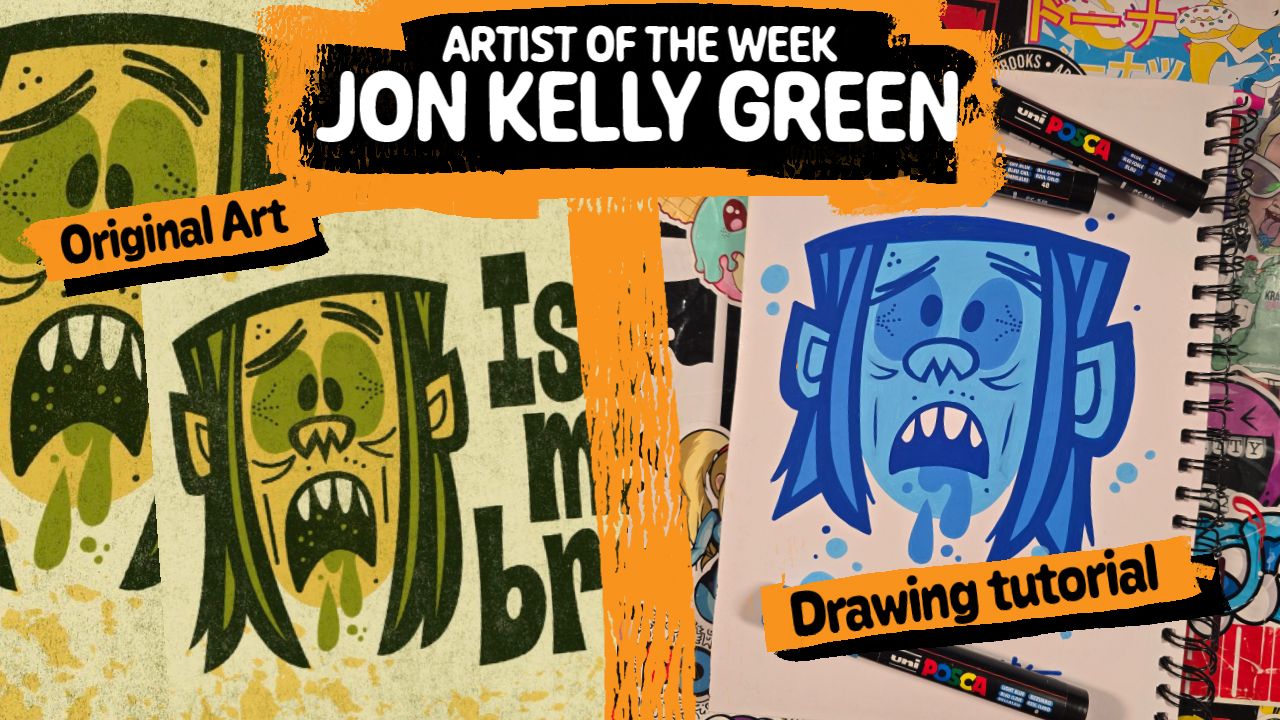
One of the easiest ways to understand how an artist works is to look past the finished drawing and pay attention to what sits underneath it. The clean lines, bold shapes and confident decisions we see at the end are rarely where the process begins. They are usually the result of something much looser, more experimental and far less controlled.
Find Jon Kelly Green on Instagram
This week’s Artist of the Week is Jon Kelly Green, an artist whose work stands out for its simplicity and clarity. His drawings often rely on strong shapes, bold lines and a very controlled visual language that feels immediate and recognisable. There is very little excess in his work, and that restraint is part of what makes it so effective. Simplicity at this level is not accidental. It requires a clear understanding of what to include and, just as importantly, what to leave out.
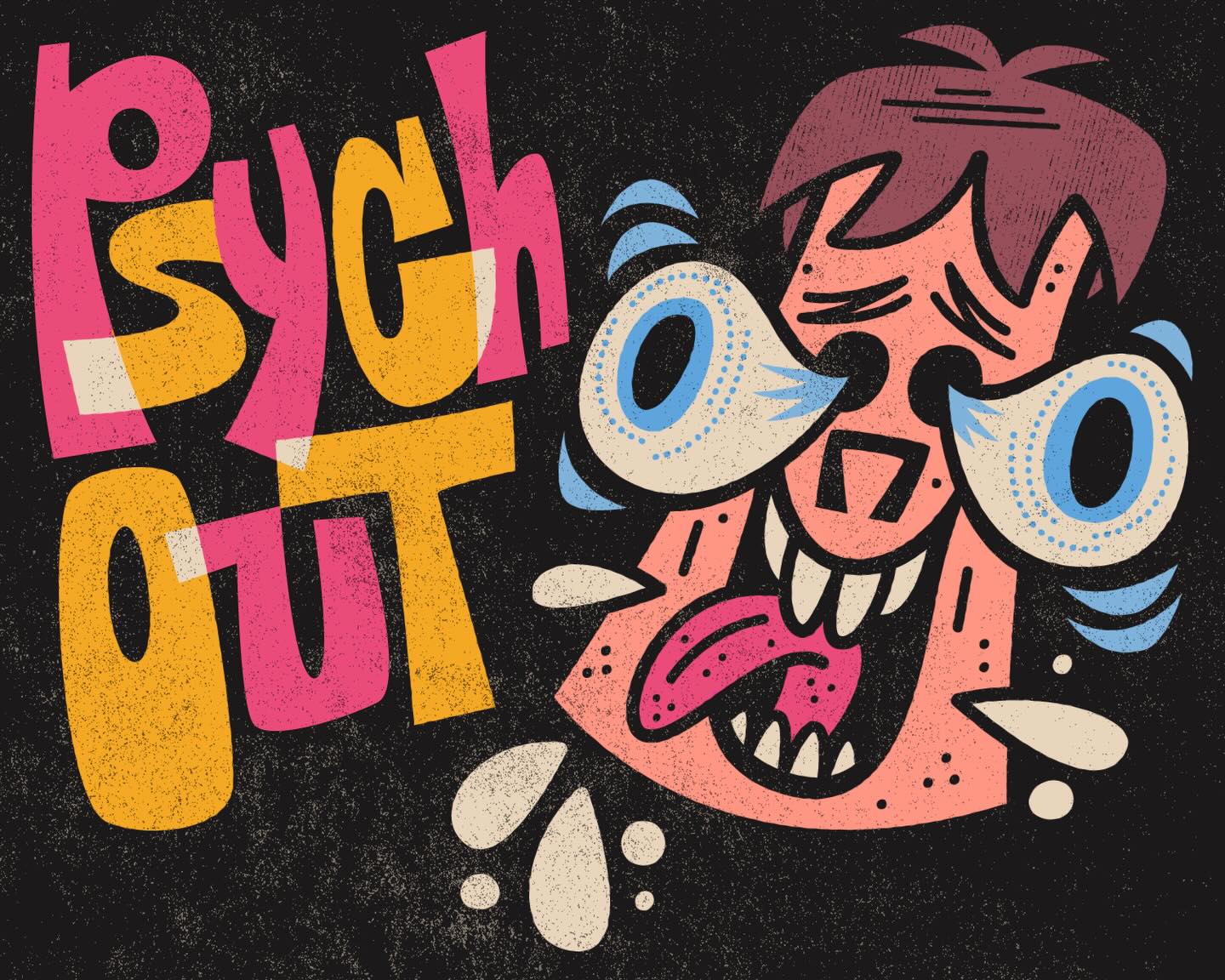
Dinosaur Jr by Jon Kelly Green
At first glance, the work feels direct and almost effortless. The shapes are clear, the lines are confident, and the overall composition feels resolved. It would be easy to assume that the process behind these drawings follows the same clean and controlled path. That assumption starts to break down once you begin to look at the sketch work behind the finished pieces.
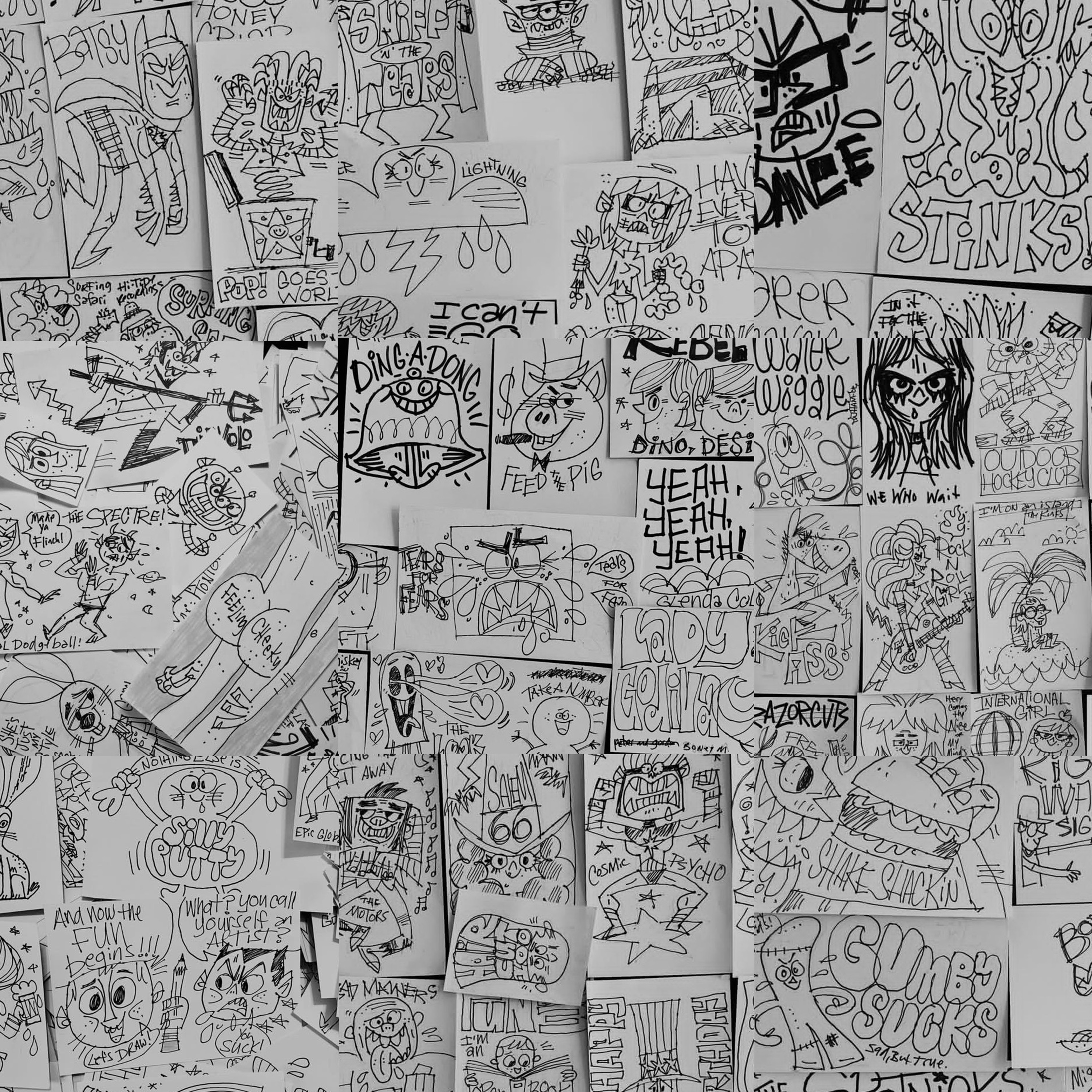
Jon Kelly Green doodles
Seeing Jon’s sketches reveals a very different side of the process. The drawings are rough, loose and exploratory. Lines overlap, shapes shift, and ideas are tested without any immediate pressure to resolve them into something polished. That contrast between rough sketches and refined outcomes highlights an important part of the process that often goes unseen. The clarity of the final drawing is built on top of something much less controlled.
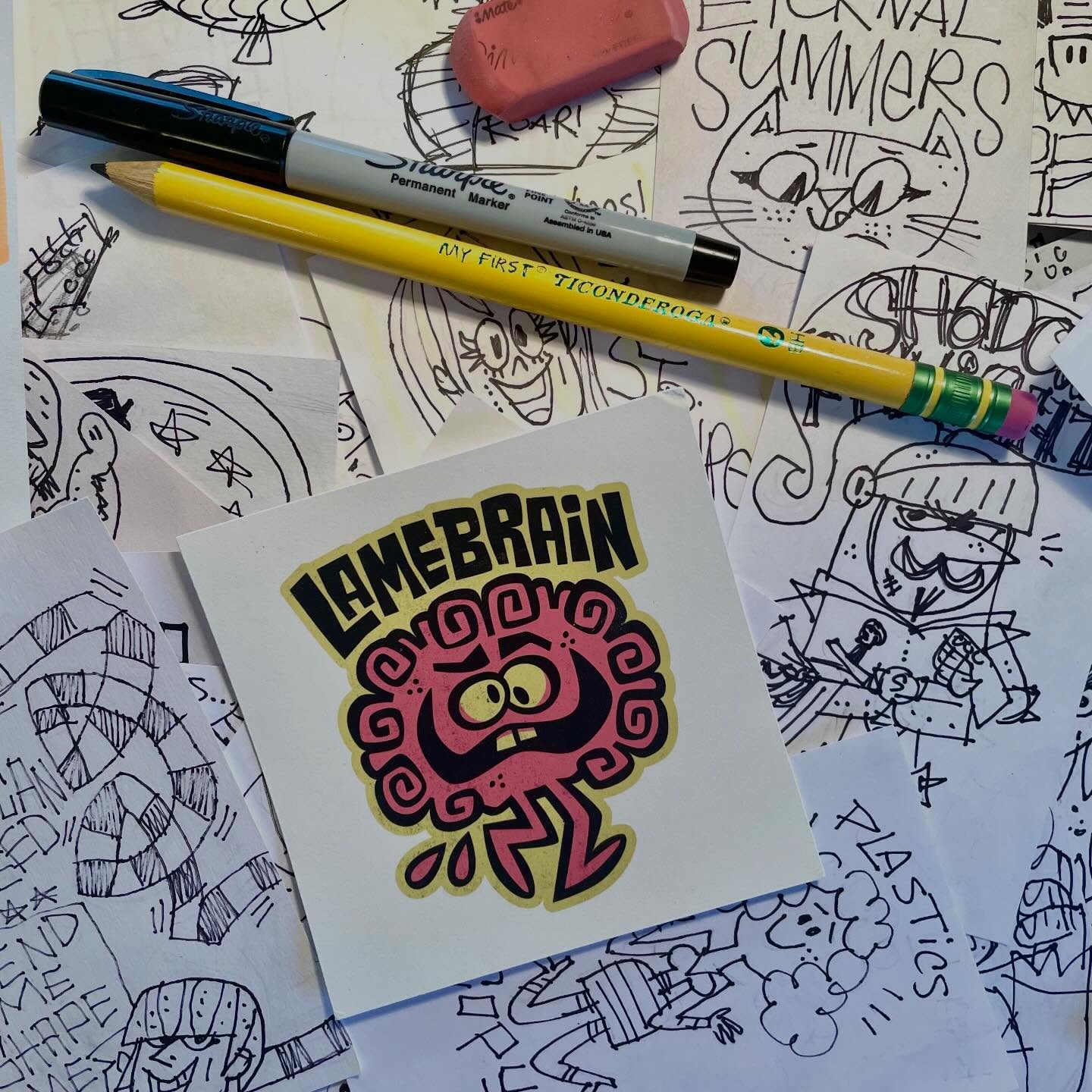
More doodles from Jon Kelly Green
Spending time with this process changes the way you think about drawing. It becomes clear that jumping straight from idea to finished piece, while efficient, can limit the range of ideas that develop over time. When the focus is always on producing a complete drawing, there is less room for ideas to evolve, combine or take unexpected directions. Sketching, on the other hand, creates space for that kind of development.
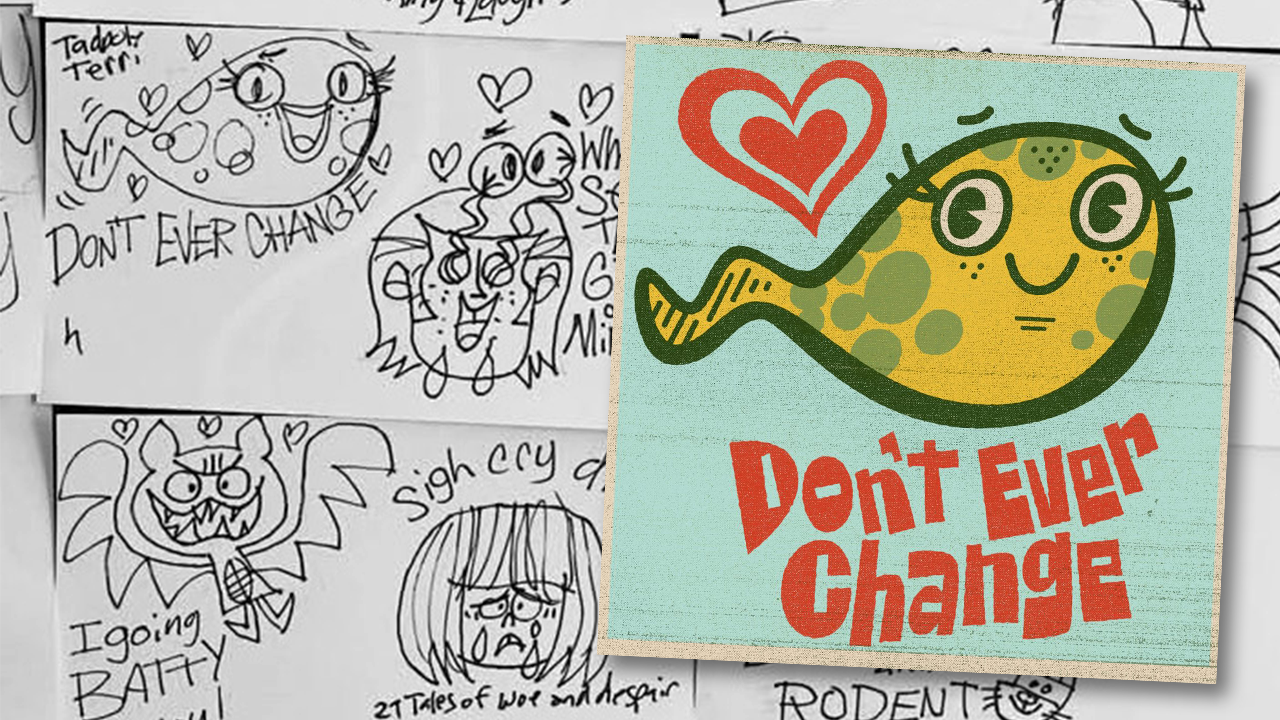
From doodle to designed - Jon Kelly Green
This shift in approach is not always easy. Moving away from finished drawings towards pages of rough ideas requires a different mindset. It involves allowing drawings to remain incomplete, resisting the urge to refine them, and accepting that not every idea needs to be resolved immediately. For artists who are used to working quickly towards a polished outcome, this can feel counterintuitive at first.
One way to explore this process is to focus on volume rather than refinement. Setting a time limit and working within simple constraints can help keep the focus on generating ideas rather than finishing them. Using a single pen, working quickly, and filling an entire page without leaving gaps encourages a different kind of thinking. Instead of aiming for a single strong drawing, the goal becomes building a collection of ideas that can be revisited later.
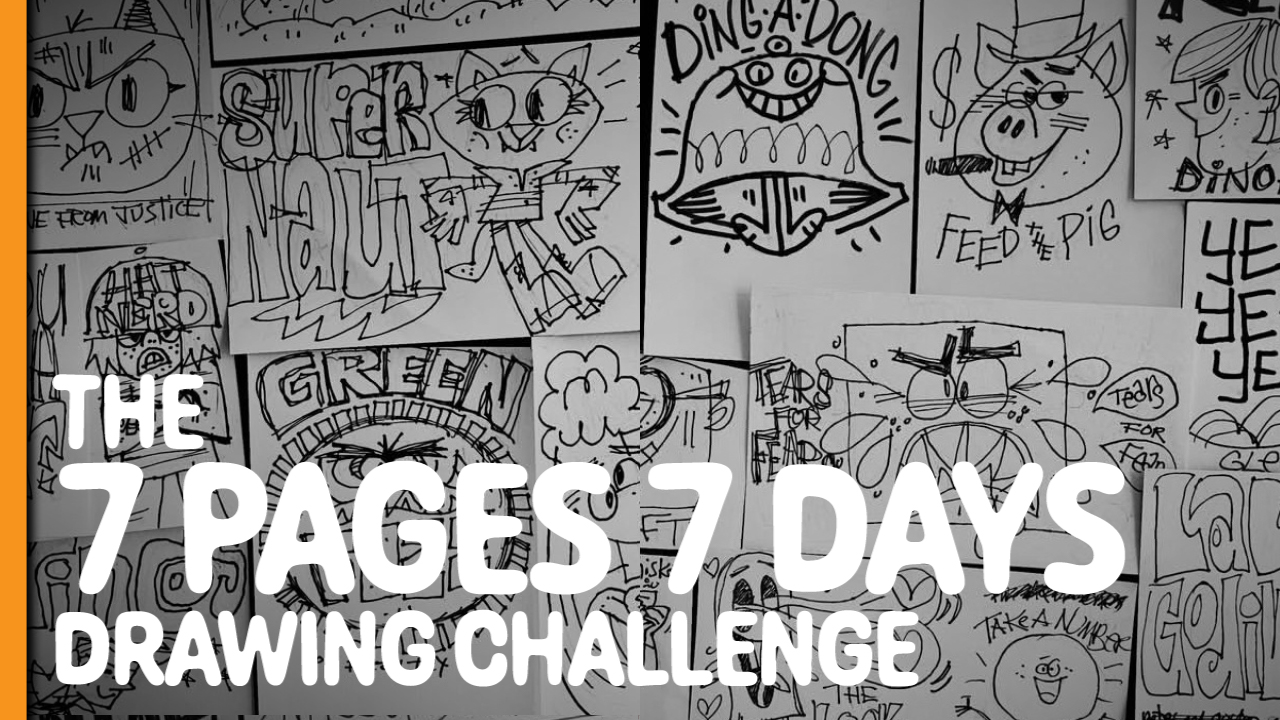
To push this further, I’ll be running a 7 Day Sketchbook Challenge inside the Korp Academy community. The idea is simple: one page a day, filled quickly and without overthinking. I’ll be in there each day sharing prompts and ideas to help people get started and keep the pages moving. The focus won’t be on producing finished drawings, but on building momentum and exploring as many ideas as possible.
Working in this way also highlights how repetition can lead to variation. Drawing the same subject multiple times, while making small adjustments to shapes, proportions or details, often leads to new ideas emerging naturally. What begins as repetition gradually becomes experimentation, and those small changes can accumulate into something unexpected.
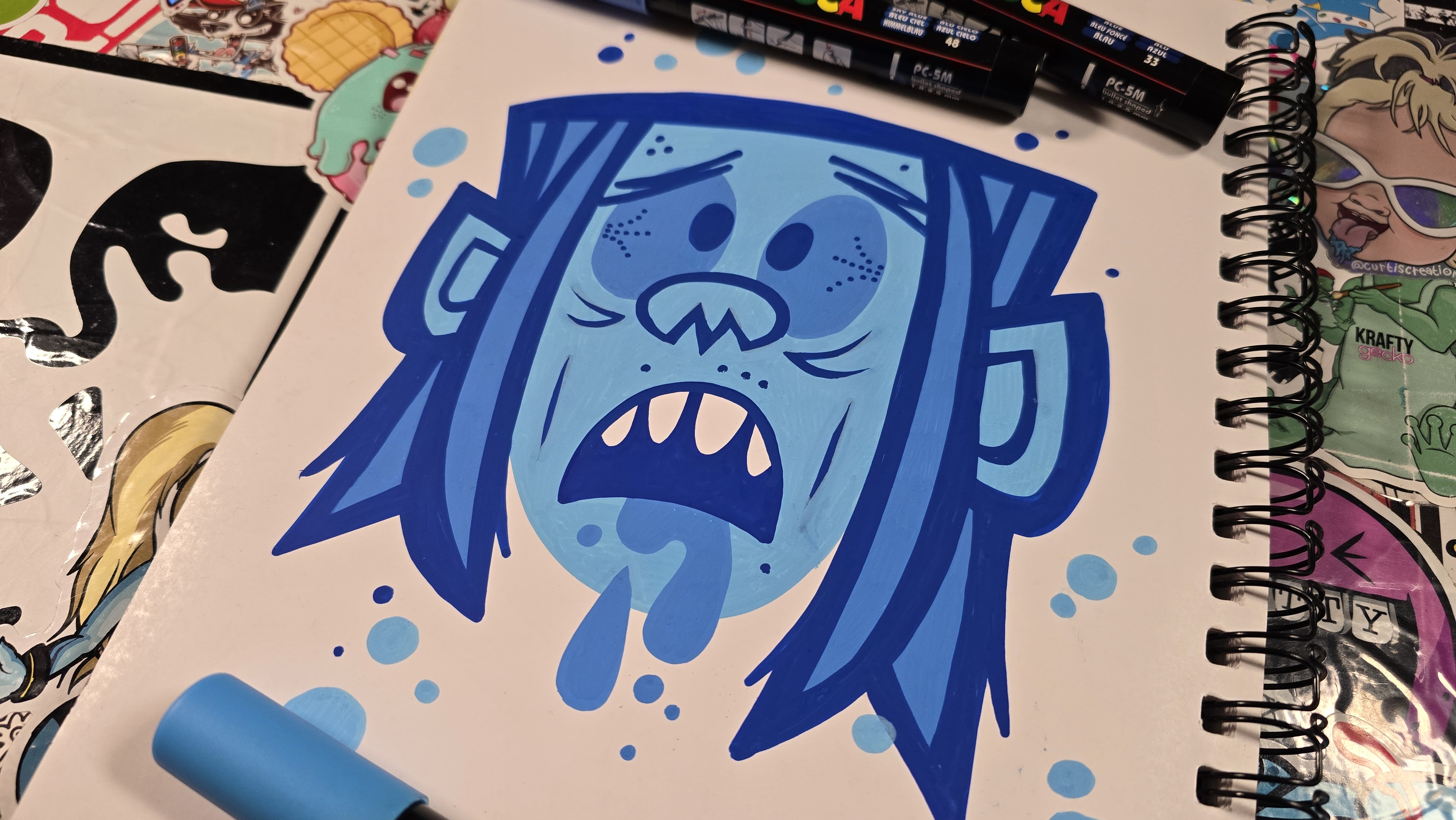
A Jon Kelly Green drawing reproduced by Korp with Posca
One of the common challenges with this approach is the tendency for perfection to reappear. Even within a loose sketch, there can be a pull towards refining lines, correcting shapes or trying to improve what is already on the page. Recognising that instinct is part of the process. In this context, a drawing that feels too controlled may actually be moving away from the purpose of the exercise. The goal is not to produce a finished piece, but to explore possibilities.
Looking through multiple pages of sketches makes this process visible. Ideas begin to branch out, forms become more varied, and a sense of direction starts to emerge. What might initially feel like a collection of rough and unrelated drawings often becomes a useful source of inspiration over time. Instead of relying on past finished work, the sketchbook itself becomes a place where new ideas can develop.
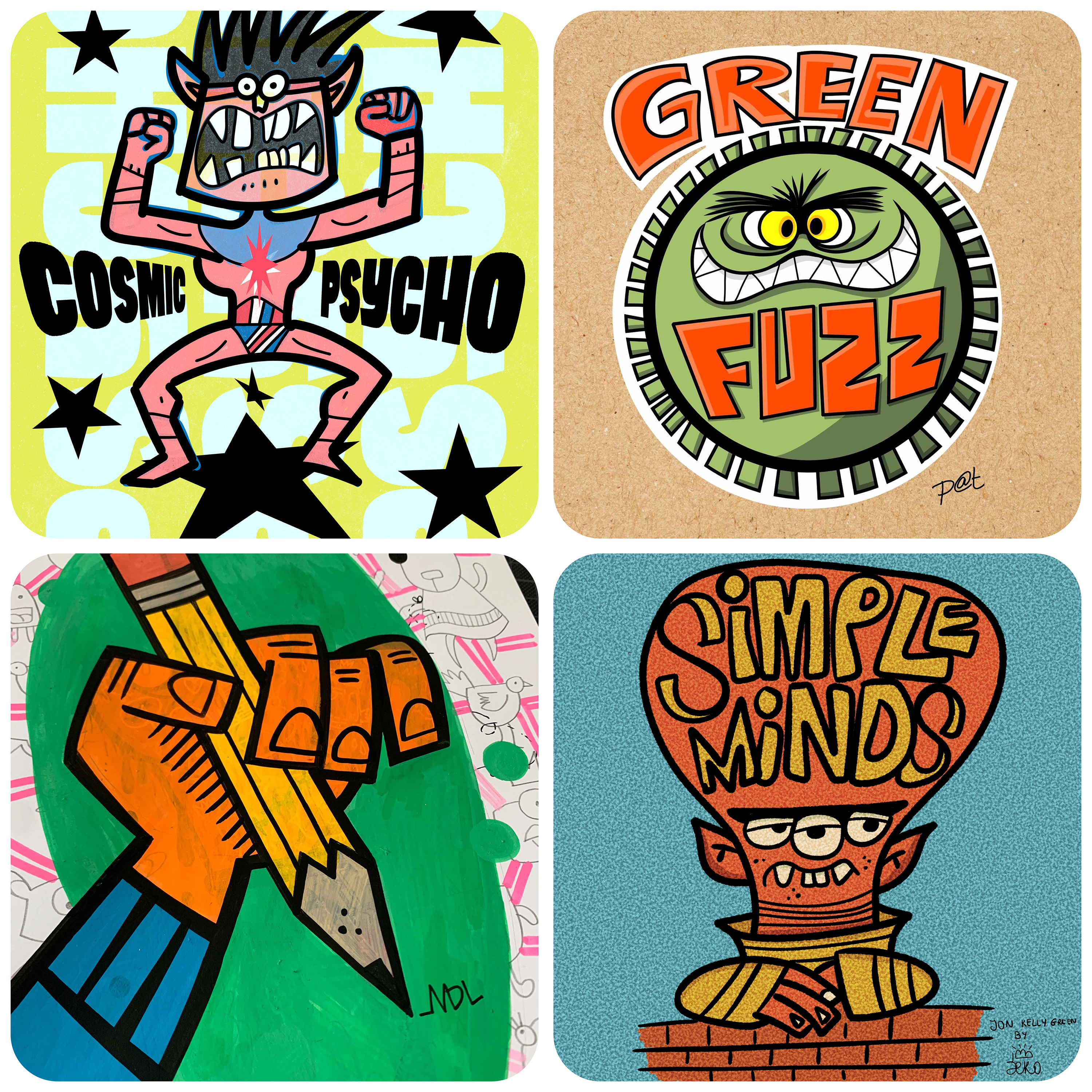
Korp Academy members artwork using Jon Kelly Green doodles as inspiration
Studying an artist like Jon Kelly Green in this way reinforces an important point. The simplicity and clarity of a finished drawing do not necessarily reflect the complexity of the process behind it. In many cases, the opposite is true. The more refined the outcome, the more exploration may have taken place beforehand.
What looks simple and finished is often built on something far less controlled.
- Korp