Why I Built DoodleDeck
Apr 10, 2026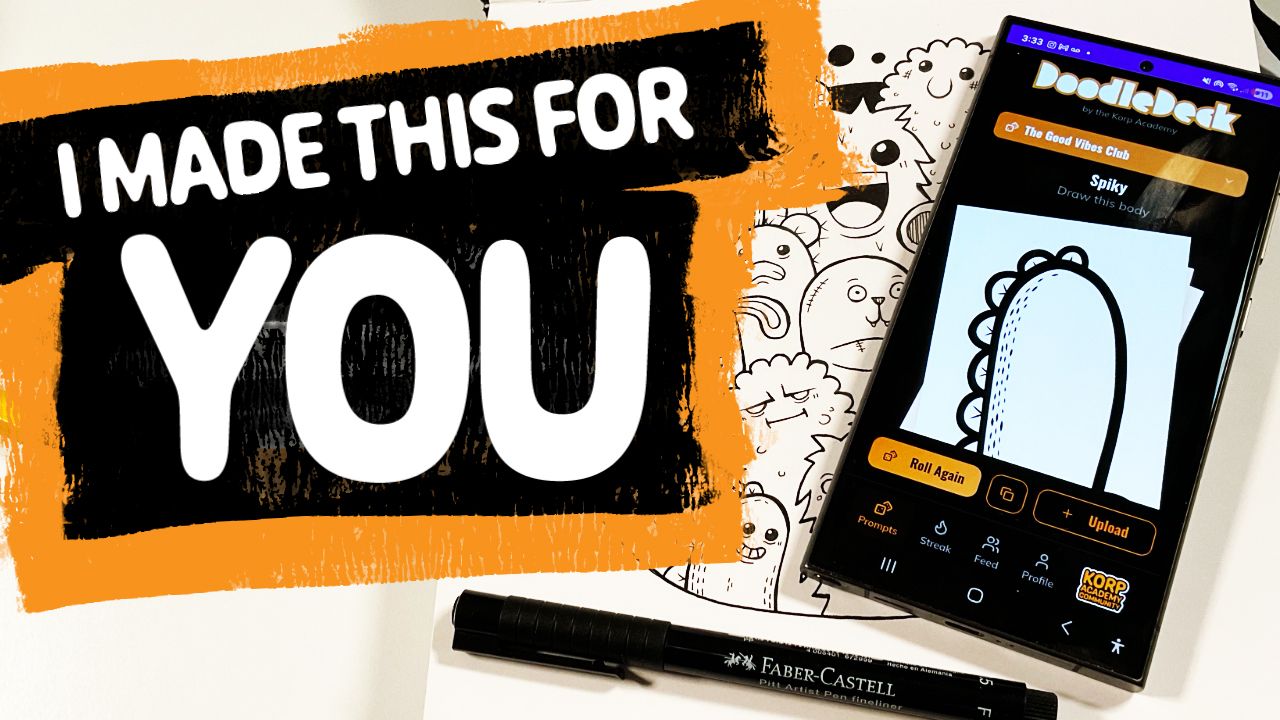
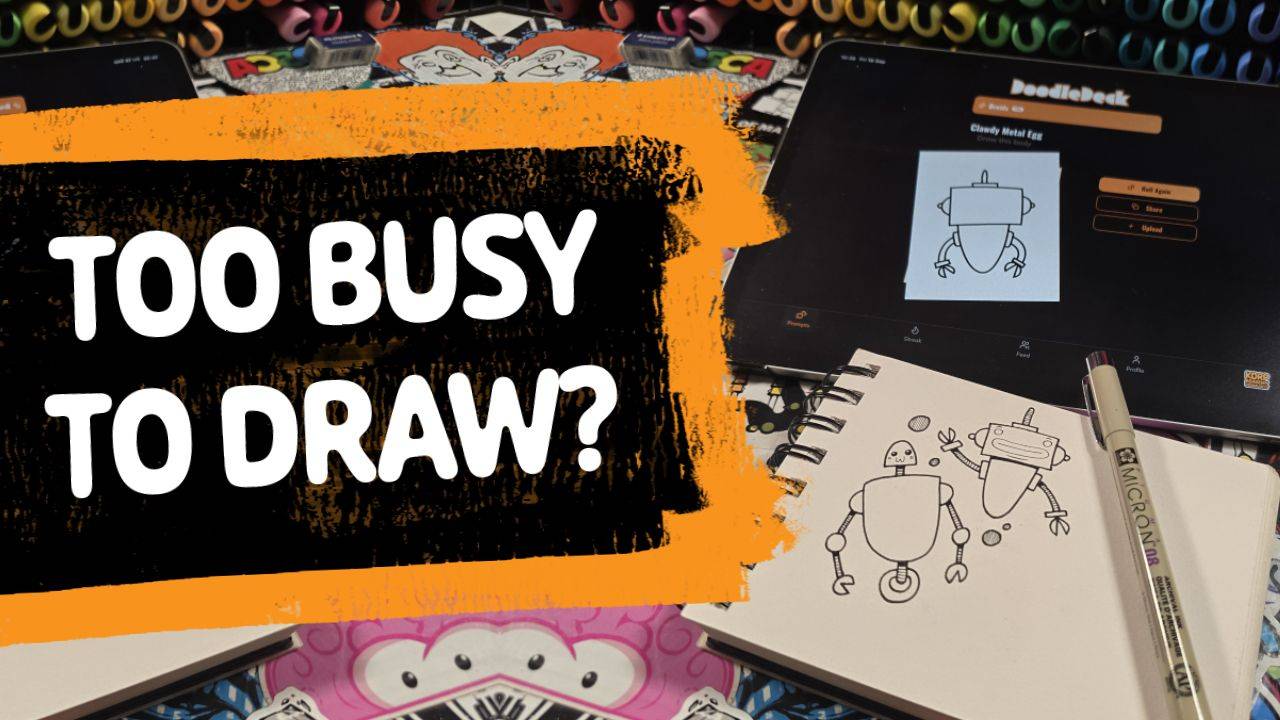
One of the biggest lies people tell themselves about drawing is that they need more time, more space, more energy, or better ideas before they can begin. In reality, most people do not have a drawing problem at all. They have a starting problem. They want to be creative, they like the idea of drawing more often, and they know it would probably do them good, but there is always something in the way. Sometimes it is art block. Sometimes it is overthinking. Sometimes it is just the friction of not knowing what to draw, where to begin, or whether they can be bothered to get all their stuff out for what might only be ten minutes. DoodleDeck was built for that exact moment.
It started from a place that had nothing to do with grand plans. I had always liked the idea of making an app, but for a long time it felt unrealistic. I could not code, and I assumed the cost of building something decent would put it out of reach anyway. Then I saw a way of doing it that made the whole thing feel possible. Instead of needing to know how to build an app from scratch, I could describe what I wanted in plain English and use that to start creating something. That was enough to get me moving, even though at that point I did not actually know what the app was going to be.
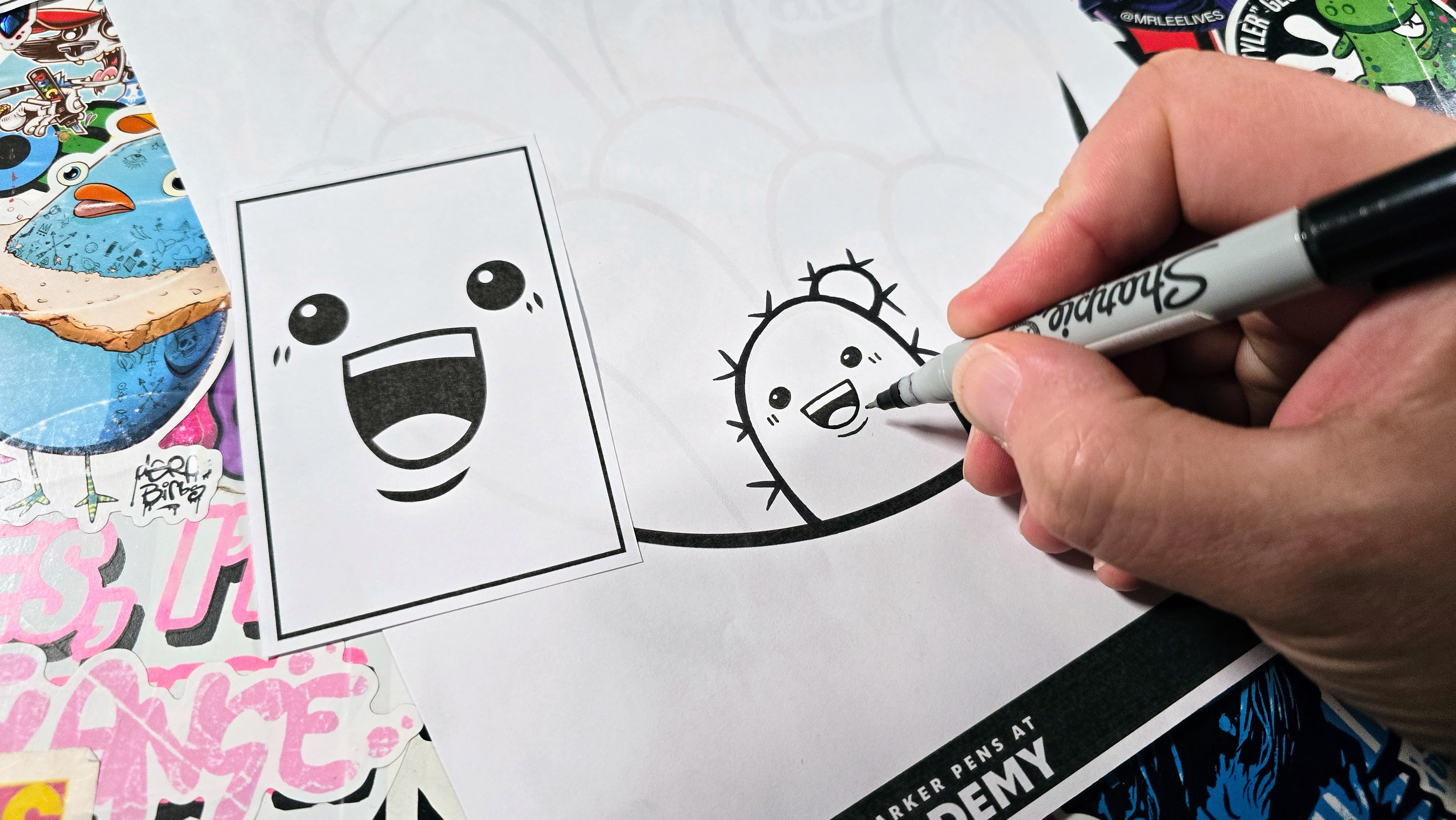
The original prompt cards drawing system
The first real clue came from something I had already been using for years: prompt cards. If you have seen my doodle guide, you will know the system. You deal a body card, a face card and a texture card, combine them together, and suddenly you have a character staring back at you. Repeat that a few times and you can fill a page without having to sit there wrestling with the dreaded question of what to draw. It is a simple system, but it works because it removes the pressure of invention and replaces it with momentum. By that stage I had made hundreds of these prompts, and the truth was they were all over the place. Turning them into an app felt like the easiest way to bring them together in one space and make them more useful.
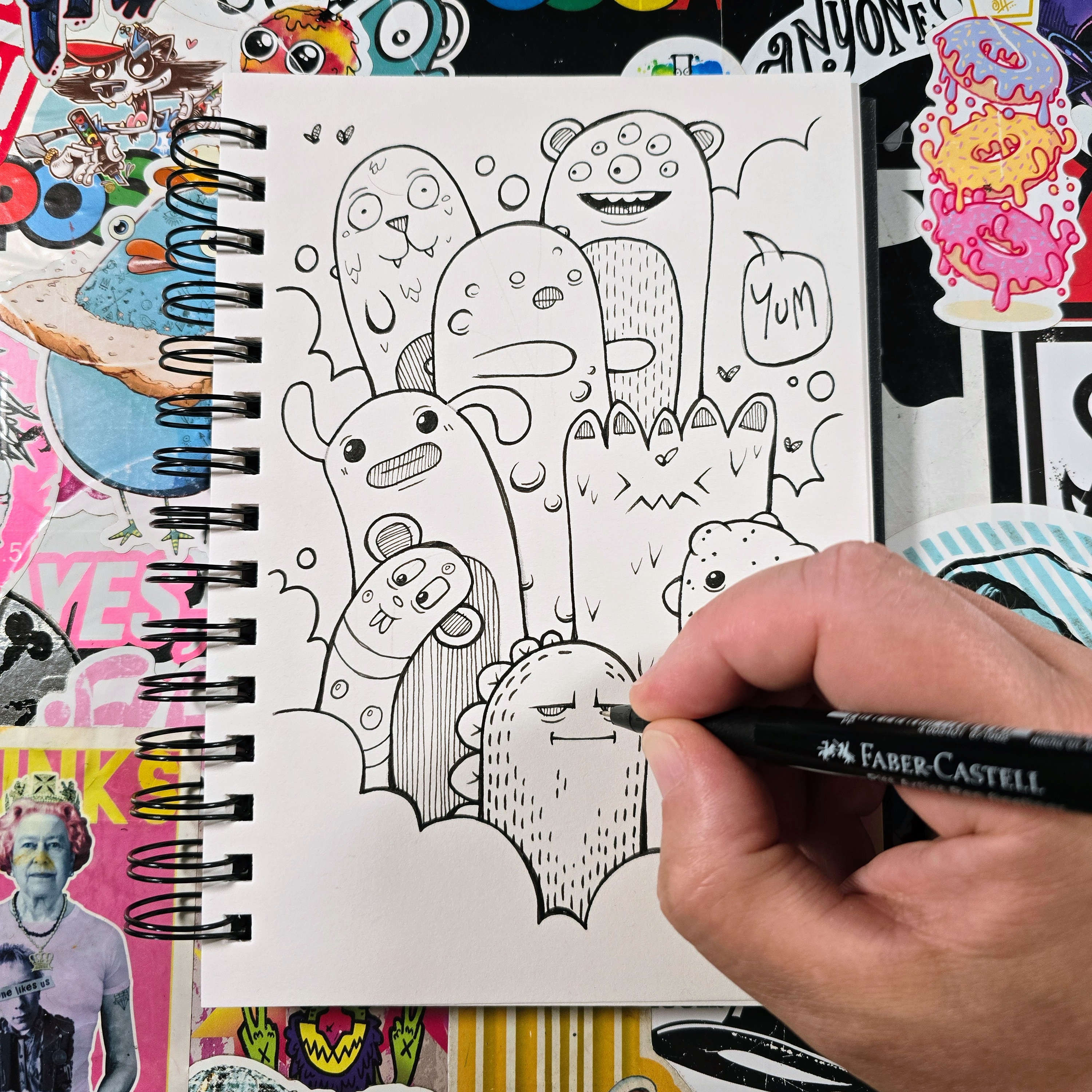
That early version of DoodleDeck was built around those cards, but it also did more than that. Because it was close to Inktober, I knew loads of artists were out there looking for drawing prompts and alternatives to the usual lists. The app made it easy to see the Inktober prompt for the day, then tap through other prompts from different lists so people could quickly find one that suited them. I also built in a social side, because at the time I thought that was what would keep people coming back. Users could upload drawings, comment, follow each other and interact in ways that would have felt familiar to anyone using Instagram. For a first version, it looked surprisingly polished, and that was one of the exciting things about building it. Even though features were still missing, it already felt like something real, so I put it out in beta with my community members and watched what happened.
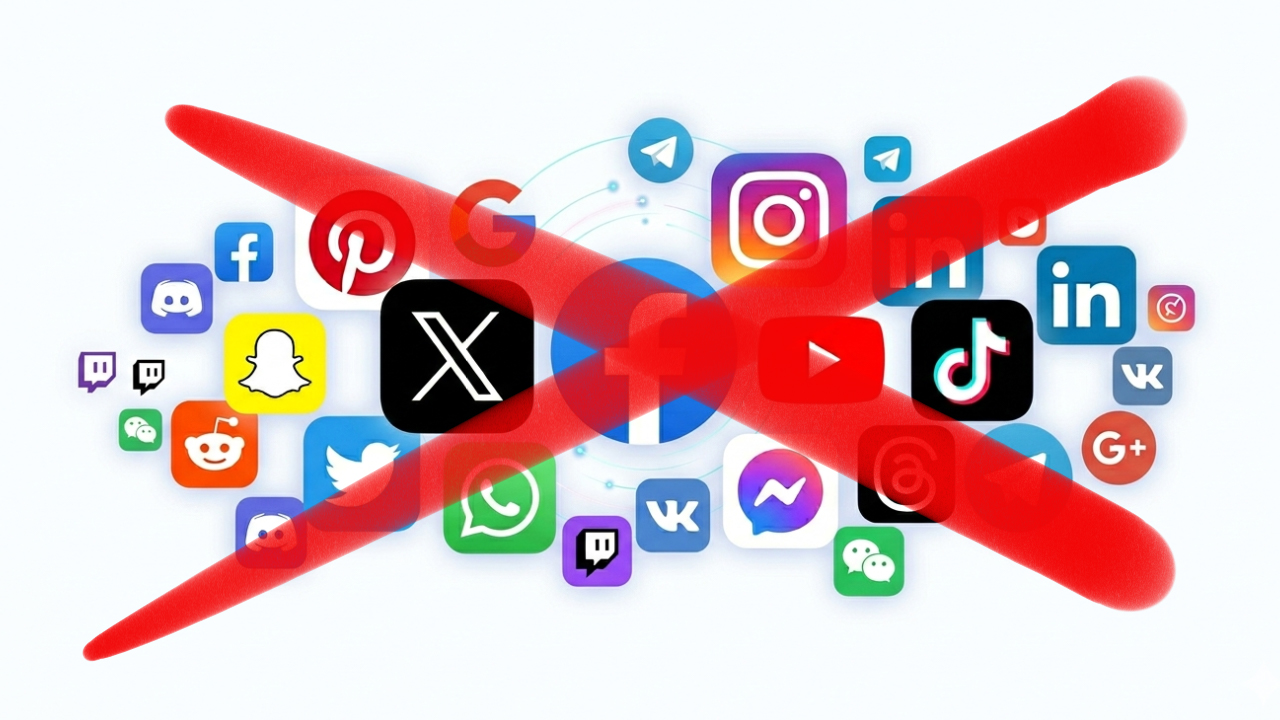
What happened next was probably the most important part of the whole project, because it forced me to be honest about what I actually wanted the app to do. I have spent years encouraging people not to chase likes, because likes are a terrible measure of creative worth. A drawing with loads of engagement is not automatically good, and a drawing with none is not automatically bad. If my whole job is about helping people grow in confidence, then building a tool that nudges them back into comparison makes no sense at all. The more I thought about it, the clearer it became that a social app was the wrong direction. It was never going to compete with platforms that already do social brilliantly, and more importantly, it was not healthy for the purpose I had in mind. Social tools bring moderation problems, spam issues, reporting systems, and endless responsibility around managing behaviour. At the time it was just me, and I did not want my role to become app moderator. More than that, I did not want the app to become another place where people felt watched, judged, or behind.
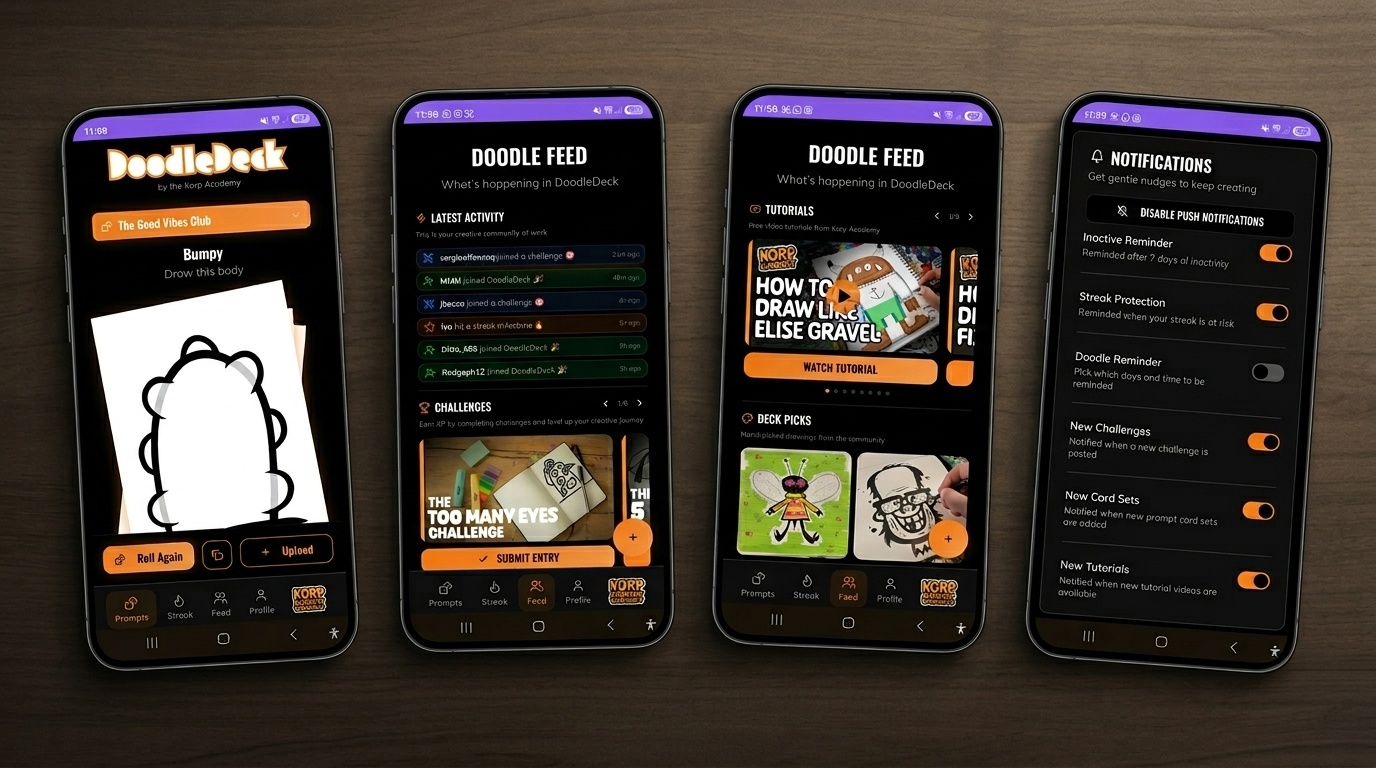
Latest screenshots from DoodleDeck including the new notifications feature
So DoodleDeck pivoted. Instead of trying to be a creative social platform, it started becoming something much more useful: a habit builder for artists. That shift changed everything. I introduced streaks so people could focus on showing up regularly instead of trying to impress strangers. Milestones and badges gave users something to aim for, not in a competitive way, but in a way that helped them notice their own consistency. The challenge was no longer to outperform someone else. It was simply to keep going. That matters because confidence in drawing does not usually arrive in one dramatic moment. It builds quietly through repetition. The person who draws for ten minutes a day, keeps putting pen to paper, and learns to recover from mistakes will nearly always become more confident than the person who waits around for the perfect idea and the perfect mood.
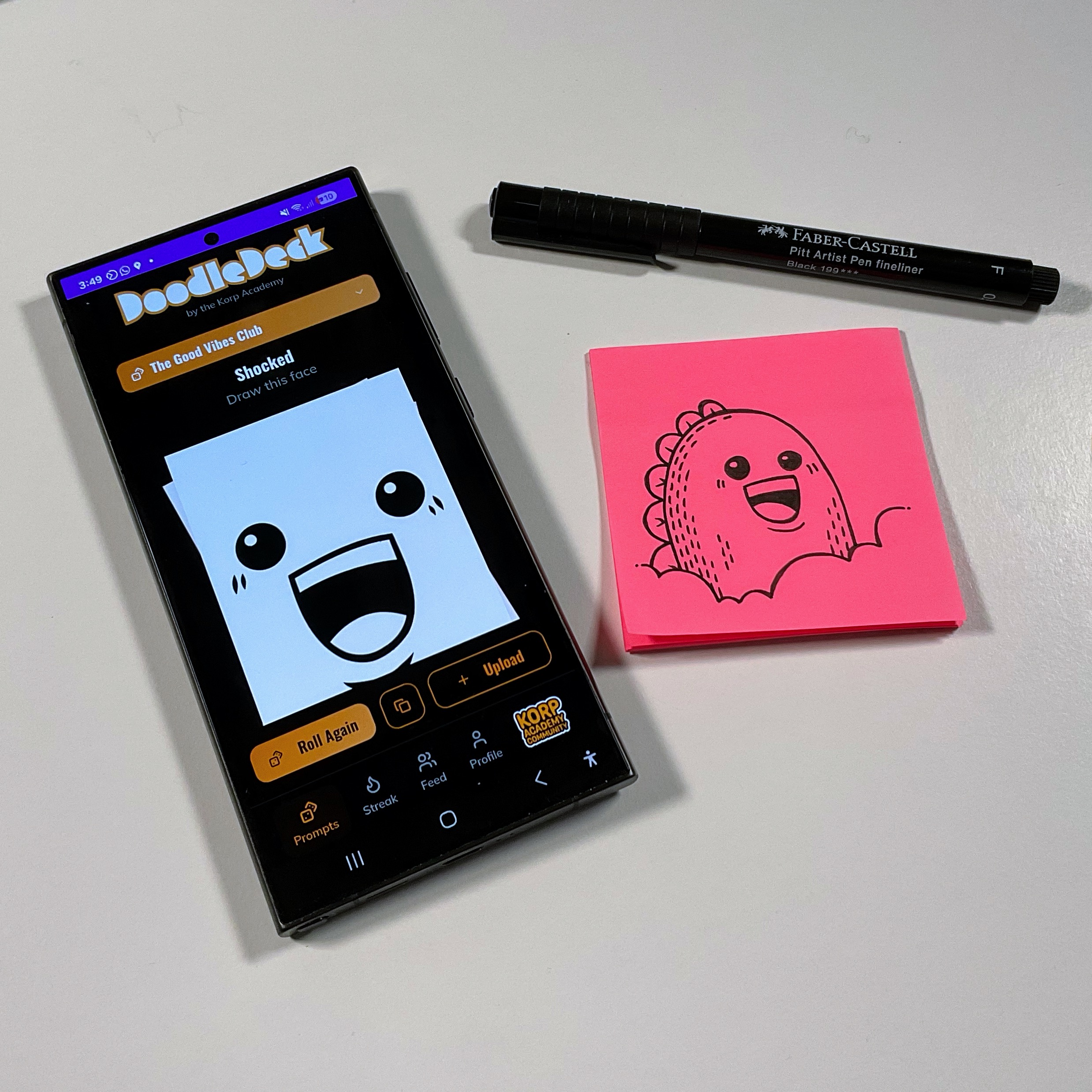
That is really where DoodleDeck is now at its strongest. When you open the app, it lands straight on the prompts screen. You choose a card set, tap generate, and you have something to draw. That simple sequence is deliberate, because I wanted the app to feel frictionless. The hardest part of drawing for most people is the gap between thinking about it and actually starting, so every choice in the app is meant to shorten that gap. There are now more card sets to choose from, and beyond the prompts there is a streak screen that has grown from a simple number into something much richer. It tracks your habit, shows analytics, includes milestone badges, and now also uses XP so that even if your streak drops, your progress still means something. I like that because it reflects real life. Missing a day does not mean you are back to zero as a creative person. You still did the work. You still built something.
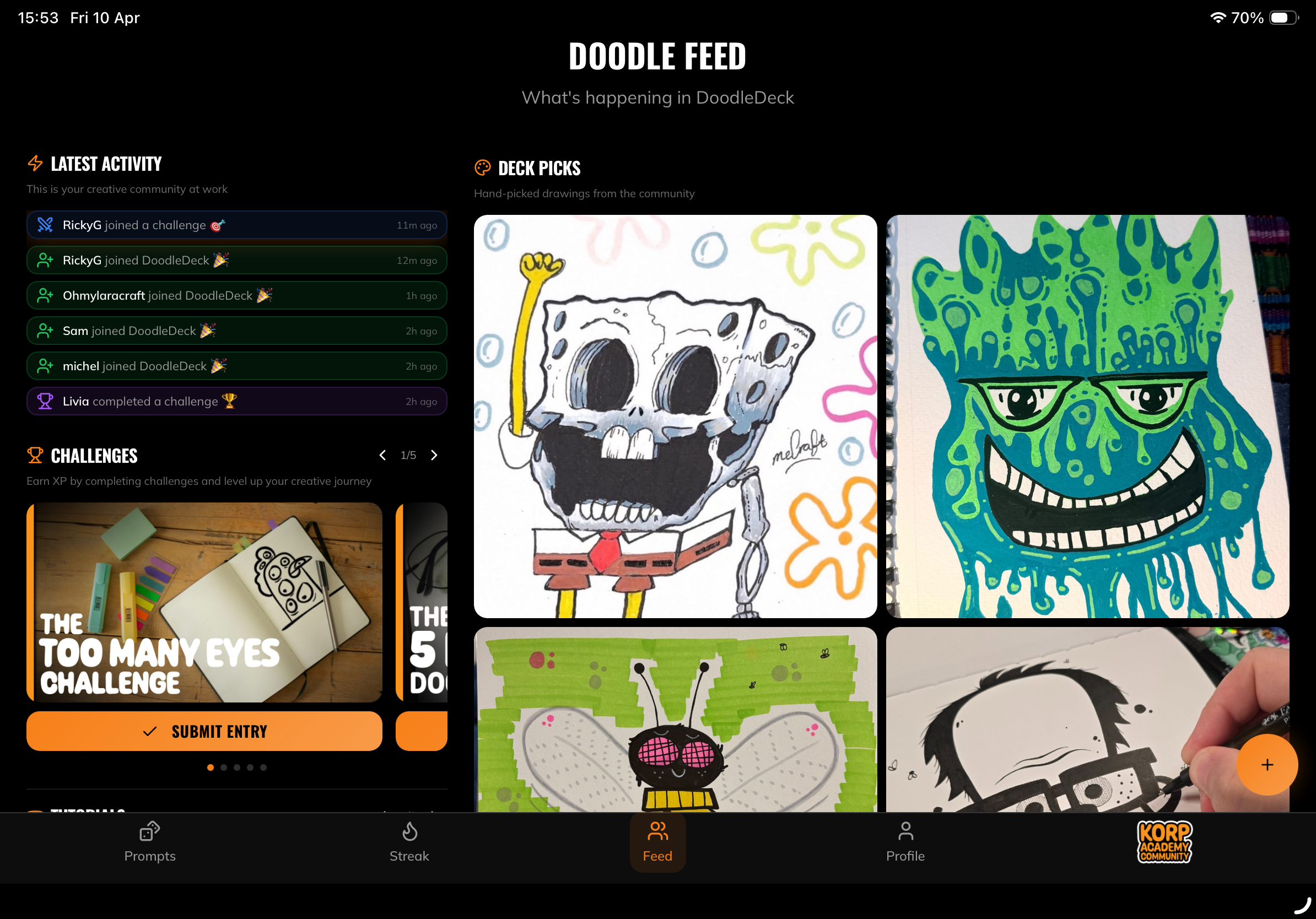
The Doodle Feed on an iPad
The feed is probably the part I am most pleased with, precisely because it no longer behaves like a typical feed. Instead of encouraging people to perform, it gives them a sense of being part of something. It shows the latest activity from users, such as sign-ups, challenges accepted, and milestones reached, which creates a feeling of shared momentum without turning the app into a popularity contest. Alongside that are drawing challenge carousels that people can browse and join, tutorial carousels featuring videos I have made inside the Korp Academy, and a curated gallery of user uploads that have been checked and selected by an admin. That matters because it keeps inspiration high without opening the floodgates to all the nonsense that usually comes with unfiltered social spaces. Then there is the profile page, which is really a private creative home base. It shows a user their own stats, badges, challenges and uploads, and it also gives them access to settings like push notifications. Because the app is a PWA rather than something living in the app stores, I am especially pleased that push notifications are now working. For a habit-building tool, gentle reminders to doodle are not a gimmick. They are part of the point.
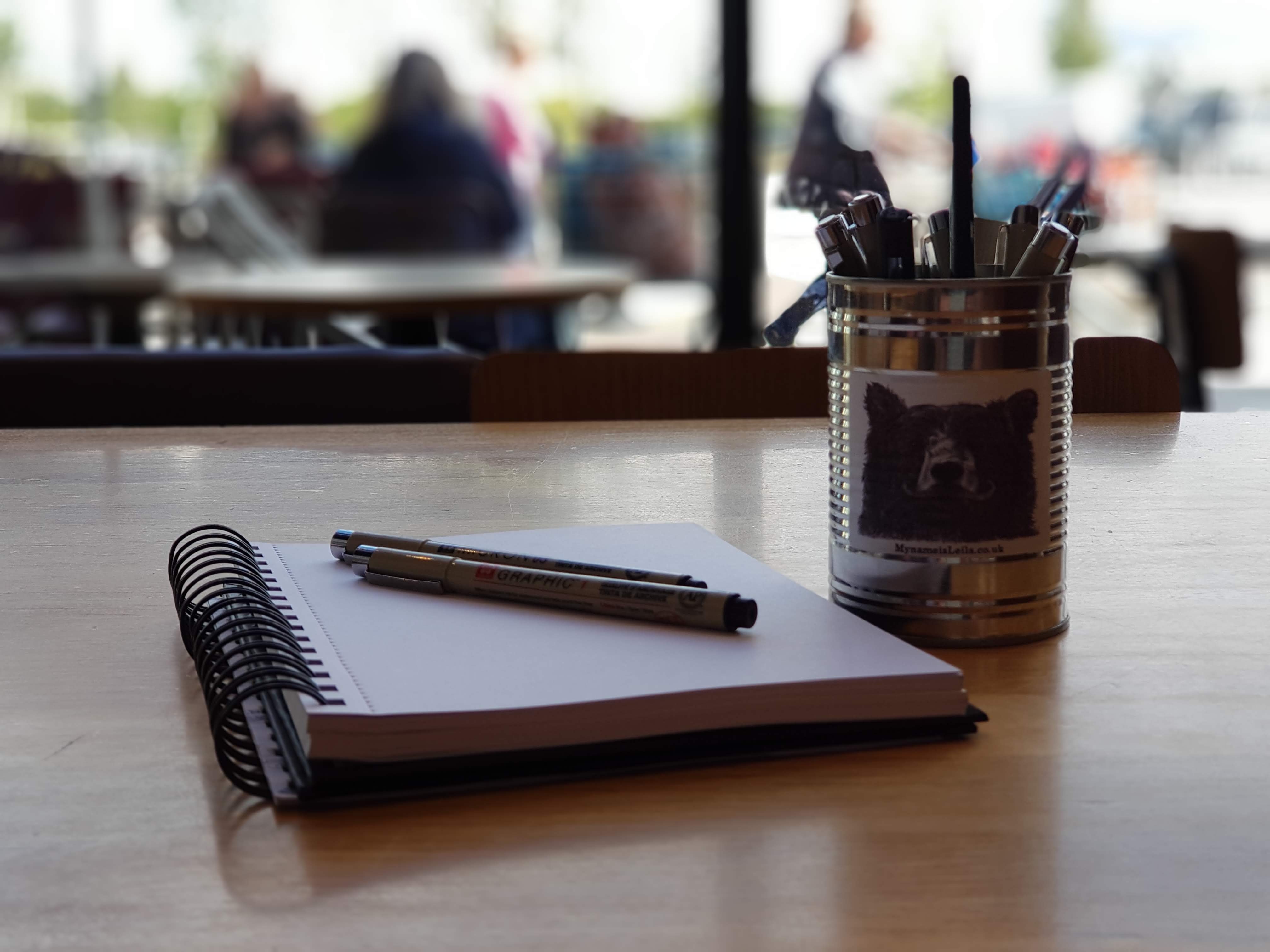
The reason I think DoodleDeck helps people start is actually very simple. It is convenient. Your phone is already in your pocket, and that means the barrier to entry is tiny. You do not need to unpack a whole art studio. You do not need expensive supplies. You do not need a giant block of time. You need the app, a pen, and a piece of paper. That is it. A lot of the challenges in the app support that same philosophy by making the task feel small and doable. One challenge might ask you to draw on a Post-it note. Another might ask you to make something in less than five minutes. Those limitations are not there to restrict people. They are there to make the first step feel so manageable that excuses begin to fall away.
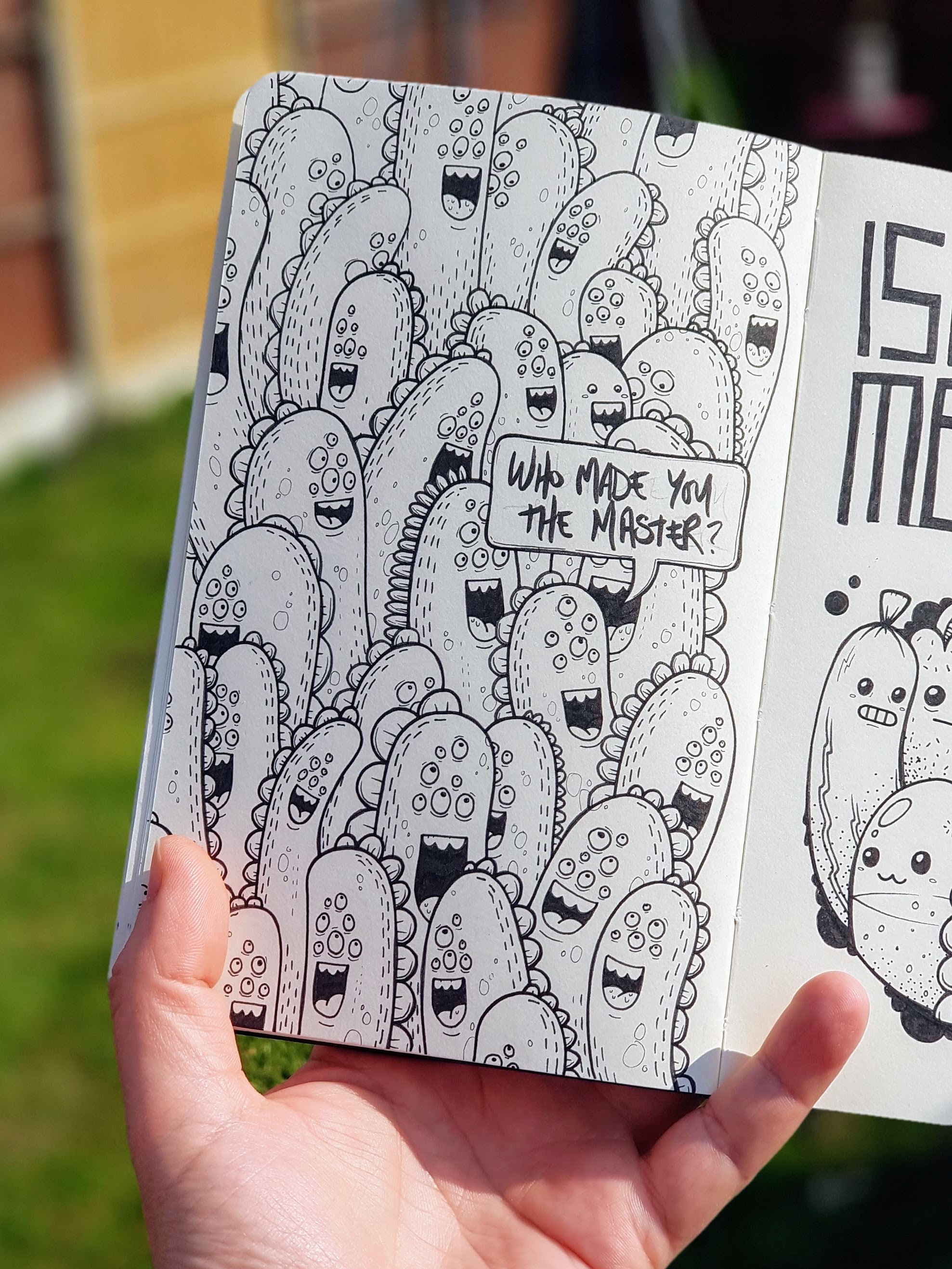
That is also where the mental health side quietly comes in, without needing to make a huge song and dance about it. Starting something creative, especially when it is quick and low-pressure, can be incredibly grounding. It gives your attention somewhere useful to go. It breaks the pattern of spiralling thoughts and puts your focus into something physical and immediate. You make a mark, then another, and suddenly your brain is working on shape, character, colour, line, and problem-solving instead of whatever stress was looping round your head a few minutes earlier. I have seen over and over again that ideas do not usually appear before you begin. They appear because you begin. Once someone is drawing, that is when they start thinking of ways to improve the piece, or colours they could use, or how to turn a mistake into something interesting. That moment is one of my favourites, because it proves the point so clearly. Creativity is often waiting on the other side of action, not the other side of more thinking.
What I find interesting is how people are actually using the app now. They are not going in there to make polished masterpieces. Most of what I see is quick, simple drawing in short bursts, which is exactly what I hoped for. Some users clearly love the streak side and are treating it as a proper habit-building tool. Others seem much more casual, dropping in and out whenever they need a prompt or a nudge. That mix is healthy. There have been over 2000 registrations for the app, with 618 free users and 526 pro users. Pro opens up the full analytics, all the challenges, tutorials and card sets, and is usually tied to being part of the Korp Academy membership. Free users have signed up for accounts so they can access more features and start building streaks, while around another thousand users appear to be using the app in guest mode, where they can simply access the original Korp Cards from my doodle guide and get on with drawing. I like that split because it reflects something important to me: even though there is a cost to developing and maintaining the app, I never wanted money to become the thing that stopped someone from being creative.
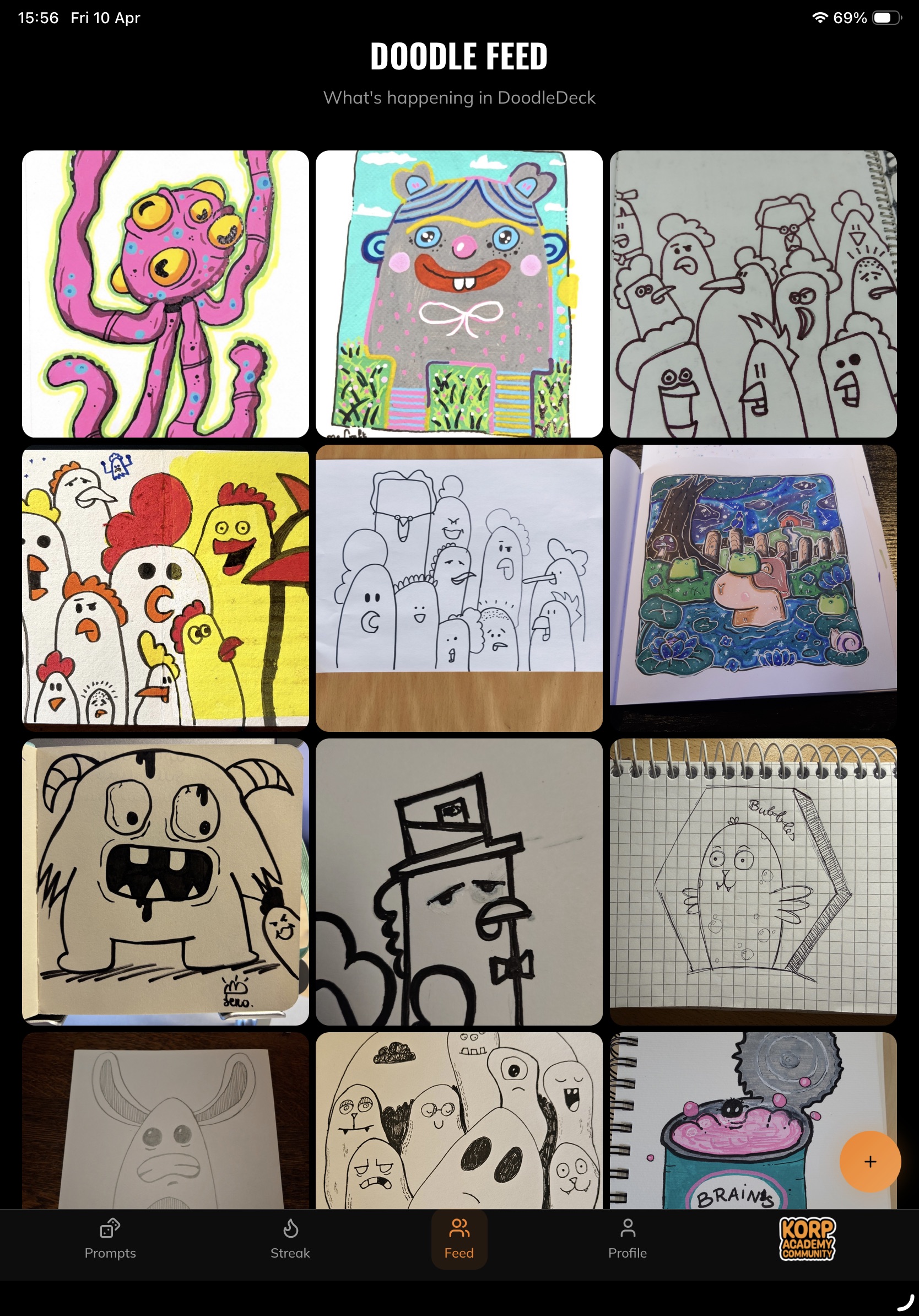
The doodle feed DECK PICS gallery
Where it is going next feels much clearer now than it did at the beginning. I have recently brought in Steph, one of the members, to help manage the app. She is exactly the kind of person I wanted involved because she is a real user with a high streak and a proper understanding of how the app fits into someone’s life. She now looks after the curated gallery, creates drawing challenges, and has become a big voice in how the app develops. That has been a smart move, because DoodleDeck should not just be built from my assumptions. It should be shaped by the people actually using it. The overall direction is firmly away from social features and further into habit-building, more like a fitness app for creatives than another platform shouting for your attention. I want to expand the card library massively, bring back the Inktober prompts and alternatives in a stronger way, and keep adding fresh challenges and tutorials so there is always a reason to return. The foundations feel good now. What matters next is scaling it up without losing the simplicity that makes it useful.
I also know what I do not want it to become. I do not want it to drift back into being another social network with likes, noise, and low-level pressure to perform. That world already exists, and it already takes up enough headspace. DoodleDeck works because it does something much simpler and, I would argue, much more valuable. It helps people start. It helps them build a habit. It helps them keep a promise to themselves that they are going to draw more often. As long as it is doing that, I am happy.
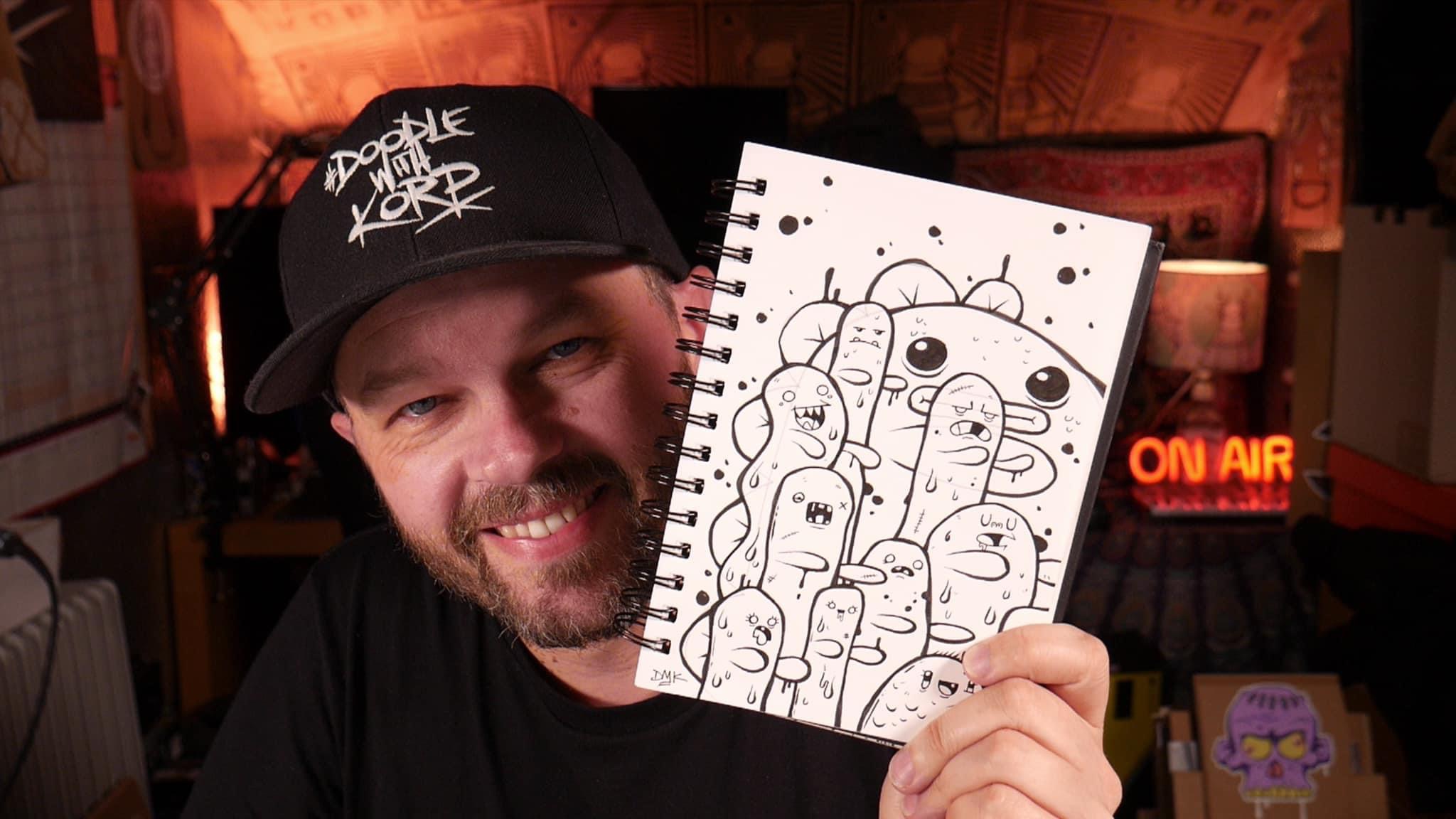
If you have been stuck lately, or if drawing has started to feel like something you keep meaning to do rather than something you actually do, that is exactly where DoodleDeck can help. Not by turning you into a different person overnight, and not by making grand promises, but by removing enough friction that you can sit down, make a mark, and get moving. Sometimes that is all creativity needs. Not a perfect plan. Just a start.
- Korp